
Journeys Beyond the Surface
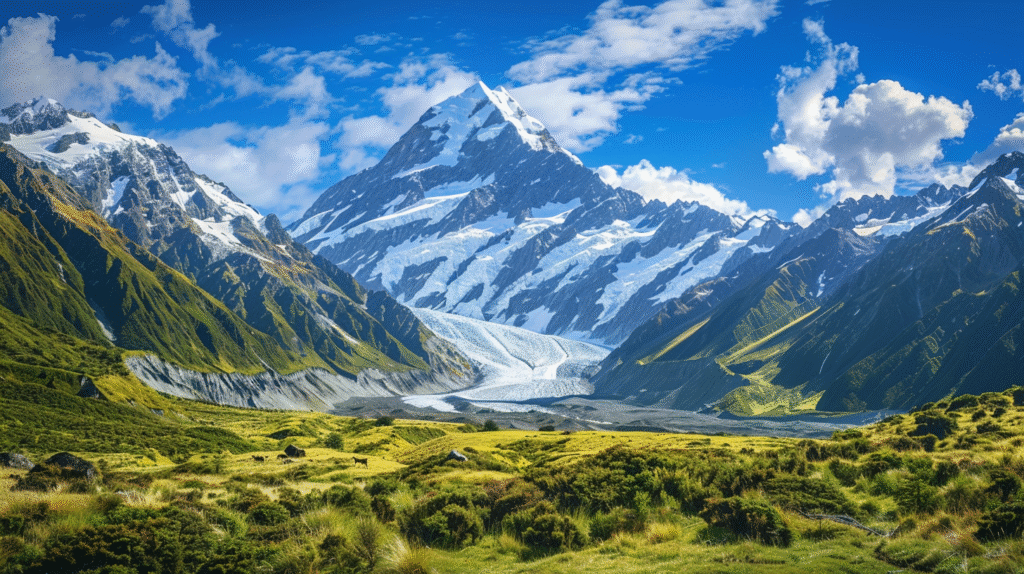
Nepal is a landlocked country in the Himalayas. Its territory encompasses four major geographical regions: the High Himalayas with eight peaks above 8,000 meters, the Lesser Himalayas, the Himalayan foothills, and the flat alluvial plains of the Terai. Together, these form Nepal’s extraordinarily diverse landscape.
To the north, Nepal borders Tibet, which belongs to China; to the west, south, and east it borders India. The high mountain ranges serve both as natural protection for the country and as a source of isolation, limiting the available living space.
The climatic differences—especially temperature variations between the high mountain region, the mid-hill areas, and the flat lowlands—are considerable. The High Himalayas act as a climatic divide between the wetter southern regions and the much drier northern areas located in the rain shadow of the monsoon. During summer, the southwest monsoon brings 80–90 percent of the annual rainfall.
Due to its scarcity of natural resources, rapid population growth, and geographic isolation, Nepal remains one of the poorest countries in the world. Opening the country to tourism has increased foreign currency revenues, but it has also caused growing ecological damage and environmental strain.
Culture and Religion
The official national language is Nepali. It originates from ancient Indian Sanskrit, the so-called “language of the gods,” in which many important Hindu scriptures were written. Nepali is therefore closely related to North Indian languages such as Hindi and Bengali. For comparison, Hindi and Nepali are about as closely related as German and Dutch.
Religion plays a very significant role in Nepal, influencing daily life and forming the foundation of the country’s traditional culture. Officially, Nepal is a Hindu state. Around 80 percent of the population practices Hinduism, about 10 percent Buddhism, and 4 percent Islam, while the remaining population consists of Jains, Christians, animists, and others. However, determining the exact number of Hindus and Buddhists is difficult because many Nepalese identify with both religions simultaneously, as the two traditions have become closely intertwined over time.
Hinduism and Buddhism coexist with ancient religious traditions that are still practiced by mountain communities. Hindu and Buddhist places of worship often stand side by side, and some of the most important sacred sites are visited jointly for puja. Puja (Sanskrit for “act of reverence”) is one of the most important elements of everyday religious life in both Hinduism and Buddhism and is ideally practiced daily. In Nepal, it is common for the same deity to be worshipped under different names by followers of both religions.
A Land of Extremes
With elevations ranging from 70 meters to 8,850 meters at the summit of Mount Everest, Nepal is, on average, the highest country in the world. In addition to Mount Everest, the Nepalese Himalayas contain nine other peaks above 8,000 meters. Furthermore, 22 mountains exceed 7,000 meters, and around 250 peaks rise above 6,500 meters.
In terms of natural geography, the country can be divided into three main regions: the high mountain region, which covers about 65 percent of Nepal’s territory; the central midlands, which account for 15 percent; and the Terai, the southern lowlands, which make up 20 percent of the total area. This division into three natural regions is closely linked to the country’s economic and ethnic characteristics.
The high mountain region contains the eight highest peaks on Earth. Due to the extreme altitude, human settlements can still be found during summer at elevations of up to 5,000 meters. Climatically, the region has an Arctic to alpine character. Combined with heavy monsoon rainfall and the resulting soil erosion, these conditions make successful agriculture extremely difficult for the local population. In terms of mobility, the lack of paved roads means that walking remains the most common mode of transport even today.
The midland region reaches elevations of up to 3,000 meters and is also considered highly challenging for transportation due to its rugged terrain. Road access exists mainly in the high valleys of Pokhara and Kathmandu. Kathmandu is home to Nepal’s only international airport. Nevertheless, the midlands—historically regarded as the core settlement area of Nepal—are home to 45 percent of the population, even though they cover only 30 percent of the country’s land area.
Located at elevations between 70 and 150 meters along the Indian border, the Terai benefits from a subtropical to tropical climate and receives the highest levels of rainfall due to intense monsoon rains. Over recent decades, the Terai has developed into Nepal’s most important economic and demographic region. Today, 47 percent of the population lives on just 14 percent of the country’s land area. Agriculture in the southern lowlands particularly benefits from the frost-free climate throughout the year, fertile soils, and irrigation opportunities.